This year’s Aspen Ideas: Health conference is tackling a host of controversial health topics from AI’s precarious role in health care to state and federal changes in public health policy.
The speaker lineup includes Priscilla Chan — Mark Zuckerberg’s wife — who has launched a new initiative through her nonprofit, CZI, to explore how AI can cure all diseases by the end of the century.
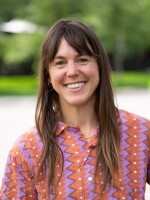
Reporter Sarah Tory spoke with the Aspen Institute’s Ruth Katz about the themes of this year’s conference, Chan’s appearance, and why they’re not shying away from these subjects.
The conversation below has been edited for clarity and length.
Sarah Tory: Can you explain the big picture trends that this year's Aspen Ideas: Health will be exploring?
Ruth Katz: I don't think this would be a surprise to your audience. One, of course, is AI — artificial intelligence. It is continuing to play a huge role in healthcare and health, and I think that's going to continue. I think another big issue is what's happening with Ebola in Africa and other potential epidemics — how we now deal with potential pandemics. Is our country ready for the next pandemic? Is the world ready for the next pandemic? And what we need to do to be prepared for that.
Some other big issues, of course, are what is happening in what I will call “breakthrough medicine” — things like gene editing, nanotechnology, space medicine, what's happening with new cancer vaccines, those kinds of things, as well as what we can expect in the future. In fact, we have some futurists participating in the program to give their views on what we can expect.
ST: And how does Priscilla Chan fit into the overall agenda of Aspen Ideas: Health this year?
RK: Priscilla Chan is a pediatrician and a philanthropist. She is also the co-founder of Biohub. Her vision is to combine frontier AI and frontier biology with the goal of creating technologies and treatments to be able to prevent, cure, and manage all diseases. That's the goal of Biohub, and she will be speaking specifically to that work during our closing session.
ST: That's an ambitious goal. I'm curious what your thoughts are on the fact that this announcement comes after her husband (Mark Zuckerberg) and CZI co-founder has cozied up to the Trump administration at a time when it's slashing funding for scientific research and public health and undermining vaccines that prevent deadly childhood diseases. What do you make of that criticism?
RK: I can only speak to the way we've designed and have always designed Aspen Ideas: Health, with an emphasis and a commitment to science. We believe in the value of science. We think it is at the foundation of the advancements that we have made, not only domestically here in this country, but globally as well.
ST: AI is obviously a huge game changer, as you mentioned, in the health world, science world, but there are also big safety and ethical concerns with this technology, like in the realm of gene editing. I'm curious: how are you balancing the excitement around AI with those dangers or concerns with your speaker lineup?
RK: We actually have an entire track that is centered on the issue of some of these hard ethical questions that you have just pointed out. We will have, for example, a session on what is the value of, or should there be some kind of guardrails, for example, around the question of screening embryos for genetic diseases?
We will have several other sessions that take up these important but really difficult issues to balance out — the pros and the cons, and some of the ethical questions that they raise. AI is certainly in that category as well. So, we'll be hearing about it as part of this track on “Gray Matters.”
ST: Under RFK’s leadership, there have been a lot of changes to public health policy in the U.S. in the past several years, specifically around vaccine guidelines. I'm curious if you will be addressing that through your speaker lineup, and what those changes have meant for public health in the U.S.?
RK: We have a number of people speaking on public health issues. For example, we have, representing a blue state and a red state, we have the secretaries of health from the state of Idaho and the secretary of health for the state of Maryland talking about actually where there is common ground between blue states and red states on various public health issues.
I'm sure you will hear about it from other individuals who will be appearing on the Aspen stage, and they're going to have different points of view on this, and that is what Aspen Ideas: Health is all about — bringing different ideas, different perspectives, to a variety of topics in public health, in medicine, in science. Hopefully, one of our goals is for people who attend to walk out thinking, "Geez, I never really thought about it from that way,” and take it home and think about it a little bit more.