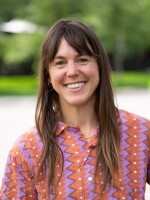
Several winters ago, Rebecca Binion met a patient at the Glenwood Springs Planned Parenthood clinic. The woman had driven to Colorado from South Dakota, through the night in a snow storm, with her husband, their toddler, and her mother.
Many of the patients who arrive at the clinic come from out of state, and Binion, who works as the health center manager for Planned Parenthood, often asks them why they ended up in Glenwood.
A lot of the patients say the Glenwood clinic is the quickest, most convenient option.
“Sometimes we see folks that will travel by car, by bus, or they'll choose to fly into Denver DIA and rent a car to travel to Glenwood Springs,” said Binion. “We're all thinking like, this is just unimaginable, but that is the country we are living in right now.”
Binion spoke at an information session on Wednesday for prospective volunteer abortion doulas on Colorado’s Western Slope.
The session was organized by the Colorado Doula Project, which started a network of abortion doulas 10 years ago and also provides financial support for abortion care. But most of their volunteers are based on the Front Range, a long way from the Western Slope where a growing number of abortion seekers need support.
Abortion doulas provide emotional and practical support to people seeking an abortion — everything from booking travel arrangements to providing transportation, meals and childcare.
In June 2022, just before Roe v. Wade was overturned, the Colorado Doula Project was helping 20-30 clients per month, according to data from the organization. Now, they’re receiving between 130 and 200 requests for support monthly. Roughly half come from Colorado, and half out of state.
As many states surrounding Colorado have enacted strict new laws or outright bans on abortion, Planned Parenthood’s Glenwood Springs clinic has seen an increase in patients from afar — particularly Texas and Utah — due to its proximity to the I-70 interstate.
Increasingly punitive laws around seeking abortion care have added to the stigma and fear surrounding the procedure — as have laws punishing women for how they handle a miscarriage or stillbirth. In 2025, police in Georgia arrested a woman who had a miscarriage after a witness reported seeing her place the fetal remains in a dumpster. According to the Marshall Project, prosecutions related to pregnancy appear to have increased since Roe v. Wade was overturned in 2022.
Gina Martinez, the executive director of the Colorado Doula Project, said the goal of the information session was to recruit new volunteer doulas who can support patients coming to the Glenwood Springs clinic from out of state or from other parts of the Western Slope.
Compared to more urban areas like the Front Range, abortion seekers in rural areas face bigger barriers to care, including long drives, mountain roads, and fewer clinics.
“What we need right now are people who live in those farther out areas where it's more feasible for them to make some of these drives,” she said.
Patients seeking abortion care at the Planned Parenthood clinic in Glenwood Springs will be able to request support through Planned Parenthood's patient navigators who will then connect those patients to the Western Slope abortion doula network.
A patient might need a ride, or someone to accompany them to a clinic for emotional support. Or they might want somebody to text or call as they're having a medication abortion at home.
The Colorado Doula Project asks prospective volunteers to take their online training course and then apply to become a doula with the organization.
Correction: A previous version of this article mischaracterized the relationship between the Planned Parenthood clinic in Glenwood Springs and future volunteer abortion doulas with the Colorado Doula Project.