Storytelling is one of the oldest art forms. It’s how we make sense of the world and ourselves; it’s a way to connect.
The Carbondale-based nonprofit VOICES started in 2016 as a platform for people to share stories through art — from mural projects to live performances.
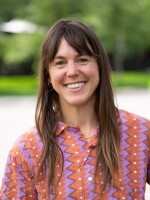
MinTze Wu is the executive and artistic director of VOICES. She spoke with Aspen Public Radio’s Sarah Tory about how hearing other people’s stories helps us see beyond stereotypes.
The conversation below has been edited for clarity and length.
Sarah Tory: I'd love to start with a little bit of the history of VOICES. And what's its mission?
MinTze Wu: We like to say that we provide a page, a canvas, a microphone and a stage. So really, anything from visual arts, to poetry writing, to devised theater — anything that has to do with art — is how we amplify voices.
Tory: And why do you think it's important to give people space to tell their story? Why is that important?
Wu: In this time and age and social climate, we have a conclusion — we have an answer before we even know who we're talking to. A lot of bias and stereotypes are actually kind of unbeknownst to ourselves. We don’t even know we have them. So, I really feel that creating a space for storytelling is to bring us back to the essence of connection. The community is only as strong as it can be when we are able to see the strength and the vulnerability of each other and really see each other for who we are — not how we are labeled, not how we are portrayed, but really who we are.
Tory: What's your method for creating these on-stage productions?
Wu: Yeah, so we use a method called the devised theater process. So in a theatre or community theater that you would be involved in, there is a script, and you’re assigned a role. This is not that. So the ensemble members come to the table not even knowing what stories they are about to tell. We go through story circles — many rounds of story circles — with a prompt where everybody gets to share for three minutes. Many rounds of the story circles result in people realizing, ‘oh, so we are really gravitating towards adventure or towards motherhood or towards when I first come out of the closet.’
From that, we have a title, and we start to collect the stories that are most dynamic and relevant to the theme that the ensemble comes up with. There are many, many different ways of telling the stories, and that's really where the fun begins.
Tory: We live in a time where a lot of people in our community don't feel safe speaking publicly or sharing their story for fear that they're going to be targeted because of their identity, whether it's because they identify as transgender or they're undocumented — a part of the immigrant community. And I'm curious how you're approaching that issue as an organization — anything specific you're implementing to make community members feel safe telling their stories?
Wu: Last year, we did our Nuestras Voces, which is our Spanish-speaking theater project in Rifle. We perform it at the Ute Theater. And were we concerned? Yes, we were. So, we actually had an ensemble of immigration lawyers on site to respond to any possible crisis situation. Luckily, there wasn't anything, and we actually had a full house.
So, I think our way to respond to this seemingly restricting and intimidating situation is to lean in even more — to say that we are here for you. And the same thing with the Queer Voices project. In the past, we have done this at TACAW, which is more mid to upvalley, but this time, we are bringing the Queer Voices project to Glenwood Springs. We're going to perform at the Vaudeville Theater. Glenwood Springs is really serving a lot of the people from the Colorado River Valley, so again, we want to show them that we are here. We're not going to not show up. We are going to continue showing up. And I think there is a tenacity and also an audacity of artists: we know that our protest and our act of resistance is in our art.
Tory: MinTze, thank you so much for being here.
Wu: Thank you, Sarah. It was really a pleasure to be here.
Support for this Nonprofit Spotlight series comes from the Aspen Community Foundation.